I’m old enough to remember going on a long road trip as a kid. Before the internet and Mapquest we had a Rand McNally Road Atlas. The map had all the highways, by-ways, toll roads, and back roads across the country. With this trusty map I could help navigate my dad from Cameron, Missouri to Fruitland, Idaho without fear of getting lost. This map could be used to navigate this 1,400 mile journey.
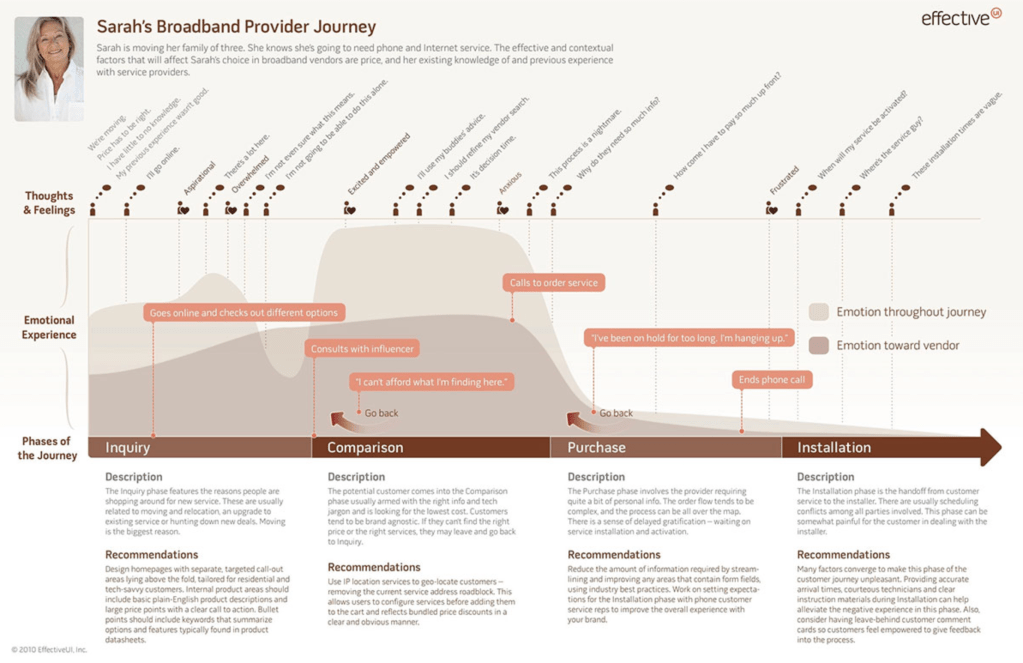
A customer journey map is no different that a road map navigating across the country, except that this expedition is laying out the customer’s experience with goods or services.
Amanda Pell writes in her article Customer Journey Mapping 101 (+ free templates), published non Zapier.com, “A customer journey map is a visual representation of the grand journey your customer takes from awareness to prospective buyer to loyal and devoted customer. This journey may take many twists and turns, through the hedges of social media to the fires of Mount Sales—but with a customer journey map, you’ll never have to wonder where you (or your customer) will end up.”
Just like the days long ago of planning out a trip from point A to point B, a journey map lay out the path our customers will take. Through this map we can anticipate possible issues, questions, or delays in our product or service.
“It gives managers an overview of the customer’s experience. They will see how customers move through the sales funnel. This will help them to identify opportunities to enhance the experience. The map will show how enhanced customer service can differentiate the organization’s digital experience,” writes Paul Boag in his article All You Need To Know About Customer Journey Mapping, published in Smashing Magazine.
Boag continues, “Most of all, a customer journey map puts the user front and center in the organization’s thinking. It shows how mobile, social media and the web have changed customer behavior. It demonstrates the need for the entire organization to adapt.”
As a designer it paramount to be focused on the customer. The journey map is just one piece in the overall design process, however there will be elements of UX design process;
– Empathize (understanding people)
– Define (figuring out the problem)
– Ideate (generate ideas)
– Prototype (creation and experimentation)
– Test (refine the product)
“When designing touchpoints and determining where and how customers interact with your business, don’t guess—your existing customer base is a valuable resource you can tap for a firsthand customer perspective. You can incentivize customers to participate in surveys and fill out feedback forms by offering discounts and perks in exchange” writes Pell.
Journey maps are beneficial to the whole team. Share them far and wide within the organization to help better understand your customers and their experiences. We all have customers we work for and if they are not in the forethought of our plans and actions we are not really invest in our customers. These maps we create ensure we are customer focused and care about their experiences.
 JD Photography
Leave a comment