
I love being a photographer. I’ve been a photographer/videographer for over decade and many of the fundamental elements are second nature. I see these elements all the time and I’ll loose myself looking at different angles and how that changes the picture.
Cath Caldwell writes in Graphic Design For Everyone, “Composition is all about how the shapes, tones, and colors of an image are arranged. The way you balance these three elements within the frame of your photo is often the difference between good and a bad photo.”
Todd Vorenkamp writes in Explore, “There are seven basic elements to photographic art: Line, Shape, Form, Texture, Color, Size, and depth.”
Line

“Lines are either straight, curved, or a combination of the two. Lines can be solid, dashed or interrupted, implied, or psychological. They can be vertical, horizontal, or somewhere in-between,” writes Vorenkamp.
Shape
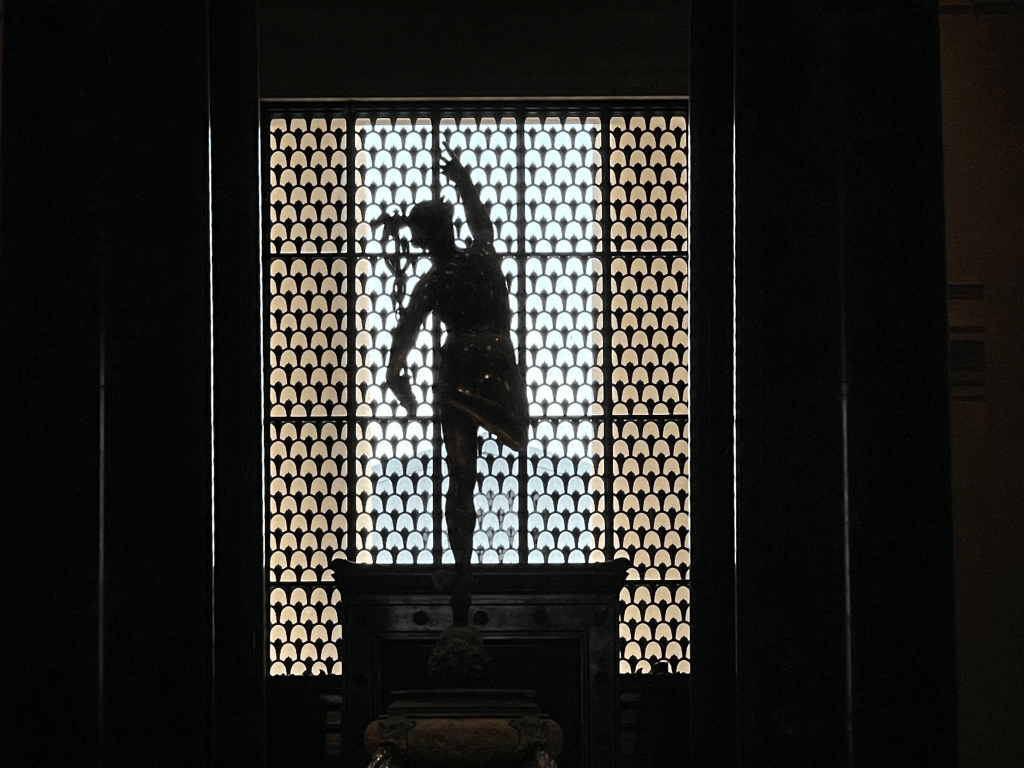
Vorenkamp writes, “Shapes are two-dimensional. They can be measured by overall height and width. Shapes can be the outline of an object—familiar or unfamiliar.”
Form

“Form is three-dimensional. Form has overall height, width, and depth,” writes Vorenkamp.
Texture

Vorenkamp writes, “Texture in the photograph is similar to form in that it is revealed by variations in tonality and presented in two dimensions.”
Color

“We live in a world of color. The light from the sun, and from artificial sources, is absorbed and reflected by different objects, and it is this reflected light that we see as color,” writes Vorenkamp.
Size

Vorenkamp writes, “We often take size for granted in a photograph, since sometimes we are just rendering a scene before our eyes. With a casual snapshot, size might not be something one even considers when composing the image. Pay attention to size because it can help you create unique images.”
Depth

“Unless you are photographing perpendicular to a blank and smooth wall, your image will have depth. How well the depth is rendered is dependent on the objects in the frame, your choice of composition, and your perspective in relation to the objects in the frame. Most images have a foreground, middle ground, and background. The stronger the delineation between those successive “grounds,” the stronger the sense of depth in your image,” writes Vorenkamp.
The basic elements are are everywhere. How do we incorporate our photography skills into designs?
“It’s one thing to create a good photo, but bear in mind that your image will need to work within your design,” writes Caldwell.
Some things Caldwell says we need to be mindful of are leaving room for type and integrating words and images.

I’ve become complacent with my shooting ability. Most of work is shot in live action. I have to adapt to constantly changing conditions. I have never thought about how my work can be used in design.
Like anything that’s new and different I feel insecure. I feel like I’m back to infancy learning the basics all over again.
Let me take a deep breath. I’m new to designing so its natural to have some growing pains. Where I’m comfortable experimenting with photography, I’m not even comfortable with my designs.
The lesson here is not to be an expert right off the bat. No, not at all. The goal is to do and grow. Mastery will come through the work.

 JD Photography
Leave a comment